

How Does Biodiversity Contribute To The Sustainability Of An Ecosystem
A recent UN-supported study compiled by over 550 researchers re-emphasized a dire finding about the country of life on Earth: Species of plants and animals beyond the globe are disappearing at alarming rates. If not halted, this loss could amount to a sixth mass global extinction in our lifetime. As envisioned by Sustainable Evolution Goal 15: Life on State, we must preserve biodiversity and use ecosystems sustainably to ensure the survival of our ain species.
We talked to UN Foundation Senior Fellow, Dr. Thomas Lovejoy, who is credited with being the first to apply the term "biological diversity" to learn more about why it matters – and is essential to sustainable development. Lovejoy is a tropical and conservation biologist, who has conducted research in the Brazilian Amazon since 1965.

Photo Credit: George Mason University
What is biodiversity?
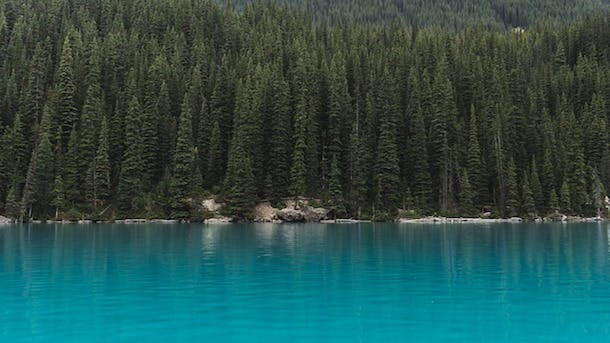
Thomas Lovejoy: Biodiversity is the collective term for the full variety of life on world. Many call back of it equally the total number of species, only information technology is actually more than circuitous than that. It'due south most the genetic diverseness inside species, the diverseness of habitats, and the big biological units known as biomes, such every bit the coniferous wood biome.
How does biodiversity impact sustainable development?
TL: Without biological diversity, there is no other life on Earth, including our own. Even though we are often oblivious to it, this diversity of life is what provides clean water, oxygen, and all other things that end up being part of our diet, too as wear and shelter. It provides a lot of psychological benefits too, which are not much appreciated.
What are the biggest threats to biodiversity?
TL:The biggest threats are habitat destruction and fragmentation, direct harvest, various forms of pollution, and climatic change. Biological variety encompasses all environmental factors, so at that place are things that are direct threats, like habitat fragmentation. There are likewise indirect things similar the distortion of the nitrogen cycle and the proliferation of expressionless zones in estuaries and coastal waters around the earth. Basically, you can't solve the biodiversity problem if yous don't solve all those problems as well.
How fast are we seeing species disappear? Which regions are suffering the nigh loss?
TL:The current charge per unit that is often used, which is i,000 times the normal rate of extinction, I call up really understates it. Nosotros are in the early stages of an exponential curve of loss. By increasing man population and imperfections in the evolution process, nosotros could lose a substantial amount of life on Earth.
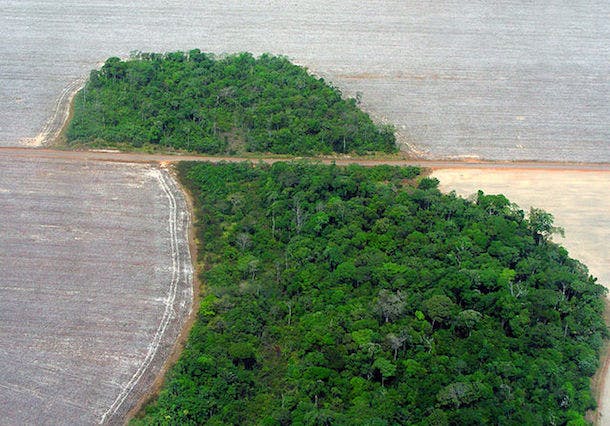
Everyone thinks first and foremost like I do about the Amazon, merely that'due south not the simply tropical forest. There'south no question about it: Tropical forests everywhere are beingness seriously hammered, specially in Southeast Asia, Africa, and South America. Some other region that may seem surprising is grasslands around the world because they are bonny to people for raising domestic animals. The great irony, of course, is the huge corporeality of degraded land in the world – that's why there is a Un desertification convention. We tin can't end upward with a happy outcome unless we spend a lot of fourth dimension restoring that degraded land to productivity – and when you practise that, yous increase biological diversity.
How can we protect biodiversity?
TL:First, I think at that place needs to be a major shift in perception from thinking of nature as something with a fence around it in the middle of an expansive, homo-dominated landscape as opposed to thinking virtually embedding our aspirations in nature. It ways restoring vegetation forth watercourses and putting natural connections back into the mural, so when species begin to move and answer to climate change, in that location is actually a way for them to do it.
How can protecting biodiversity as well help mitigate climate modify?
TL:Ecosystem restoration is so important in terms of reducing the carbon load in the atmosphere, which causes global climate change. Nosotros at present know that the corporeality of carbon dioxide in the temper from destroyed and degraded ecosystems (over the last ~eight,000 years) is bigger than we ever knew before. It's nigh 450 – 500 gigatons of carbon, which is more than than the total amount of carbon dioxide emitted from fossil fuel combustion so far.
Just inquiry shows that restored ecosystems could provide up to one-tertiary of the climate mitigation needed past sequestering carbon from the temper. So actually, the important shift here is to stop thinking of the planet as a concrete organisation just equally a linked biological andconcrete organisation.
SDG 15 (Life on Land) will be reviewed at this year's High-Level Political Forum (HLPF)in 2018. Here, participating countries will nowadays Voluntary National Reviews (VNRs) of progress on this goal and others.
What are some examples of effective policies for SDG fifteen yous know of?
TL:I am certain that Republic of costa rica and Republic of botswana serve every bit outstanding examples. Republic of costa rica prides itself on being the "Green Republic." 28% of the country's territory is protected by national parks. At that place has also been a lot of reforestation in Costa Rica, in part because of an explicit decision to take an ecosystem services law to tax gasoline and use the revenue to benefit reforestation. Every bit a result, Costa Rica is the first tropical country to have stopped and reversed deforestation: over one-half of its land is covered by forest, compared to 26% in 1983.
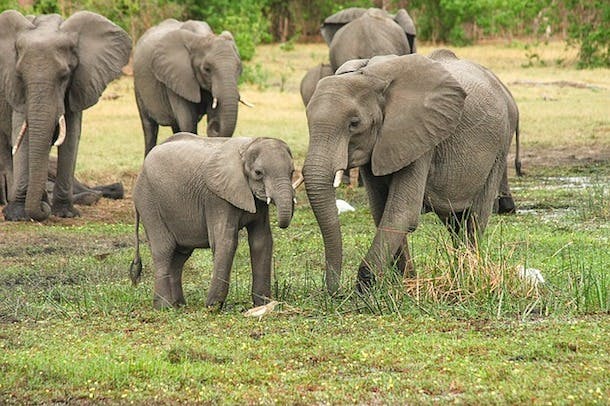
Botswana has recognized that its wilderness and wild animals are an incredible source of economic benefit, so it outlawed the hunting of lions and other bays hunting. The state has a thriving ecotourism industry. When you call back near ecotourism, it'due south not just about the people who drive the Volkswagen motorbus; it is everything that feeds into supporting the tourism industry. And when it's done right, the revenue reinforces the economic well-being of the people in the region.
What has the international community done to protect biodiversity on a global calibration? What are the challenges moving forward?
TL:The Convention on Biological Diversity, which was signed by 150 governments at the 1992 Rio World Summit, sets targets to halt the loss of biodiversity. Over the concluding 25 years, we've seen the amount of increased protected expanse in the world grow impressively.
The electric current set up of targets, the Aichi targets, are pretty ambitious. Looking ahead, the big claiming is the 2020 Briefing of the Parties to the Convention on Biodiversity in People's republic of china, which volition gear up the next prepare of targets for the next decade. There may be a reluctance to accept ambitious targets considering it'due south not entirely clear how well nosotros will practice on the current ones, only yous never know.
When I started working in the Amazon, which is as large as the 48 contiguous United States, in that location was only 1 national park in Venezuela. Today, more than half of the Amazon is under some form of protection.

Photograph Credit: Global Environment Facility
Source: https://unfoundation.org/blog/post/biodiversity-essential-sustainable-development/
0 Response to "How Does Biodiversity Contribute To The Sustainability Of An Ecosystem"
Post a Comment